
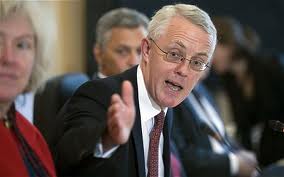
Sir Jon Vickers’ speech at the weekend had the desired effect on bank shares yesterday – they dropped like a stone!
Sir Jon, who is currently chairing the Independent Commission on Banking, used the two most fearsome words in his armoury guaranteed to send shivers up any self-respecting pinstripe – Glass Steagall.
For those who want to see the banks brought to heel this is heady stuff. For the uninitiated, the Glass Steagall Act was brought in by the United States in the wake of the mother of all banking crises, namely the Great Depression, forcing through the splitting of investment banking (we like to call them casino banks nowadays, usually made up of derivative trading, currency arbitrage etc) and retail banks (those that you and I have our salaries paid into, the same ones that won’t lend to business).
Sir Jon’s Commission was set up to make recommendations on various banking issues in the wake of our most recent crash, not least a reduction in systemic risk; mitigating moral hazards in banking (that’s code for anything which makes bankers think “we know we shouldn’t be doing this, but it makes us piles of money”) promoting competition and structural reform, which includes splitting.
Will it happen? Who knows, but the suspicion remains that this is sabre-rattling designed to get the banks to come to heel over bonuses, particularly in light of Nick Clegg’s support for the proposal on Andrew Marr’s programme on Sunday (I sense a Clegg u-turn coming on).
Sir Jon, who will instantly catapult to the head of my list of contenders for Man of the Year if he actually does recommend it (what more incentive could he possibly need), is due to report in the Autumn.
My suspicion is that we will have a compromise in the end with the investment arms of banks like Barclays and HSBC becoming subsidiaries with separate balance sheets and all sorts of other rules to stop any future ‘contagion’ infecting our retail banks should another crash occur.
One to watch.
Tuesday, 25 January 2011
The Return of Glass Steagall (maybe)


Friday, 22 January 2010
Bank Reform: Obama plays the populist card, Dave follows!

No Drama Obama is not living up to his name. Yesterday's announcement on banking reform was as unexpected as it was brutal in its detail. Limits on further banking consolidation in a bid to limit 'Too Big To Fail'; limits on interaction with hedge funds which rely on market volatility to make big profits (or losses) and limits on proprietary trading (using the bank's own money to invest in high risk investments) when they should be building their capital base.
Sounding more than a little bit peeved (presumably at the size of the combined investment banking bonus pot) Obama labelled much of what the investment banks do as "reckless" and sent this message "work with us, not against us," continuing "If these folks want a fight, it's a fight I am ready to have."
The reaction from the financial markets was expected with banking stocks on both sides of the Atlantic being hit (although it was interesting to note that HSBC, which has always been far more conservative and was never heavily exposed to the mortgage CDO market, only took a minor knock on the London Exchange).
However, some perspective is necessary. Obama faces what is increasingly looking like a difficult set of mid-term elections in early November. There is unquestionably a political calculation here as Main Steet America remains furious with its banks. Over here the Tory party's quick reaction last night welcoming the Obama initiative was equally as populist, with one eye on the General Election, while the Labour Government remains leaden-footed and cautious.
It is a strange world when the Tory party is aligned with the Guardian (today's editorial "At last, action") and the Financial Times (today's editorial "A dangerous populist flirtation with Glass Steagall") is more closely aligned with the Labour Party.


